
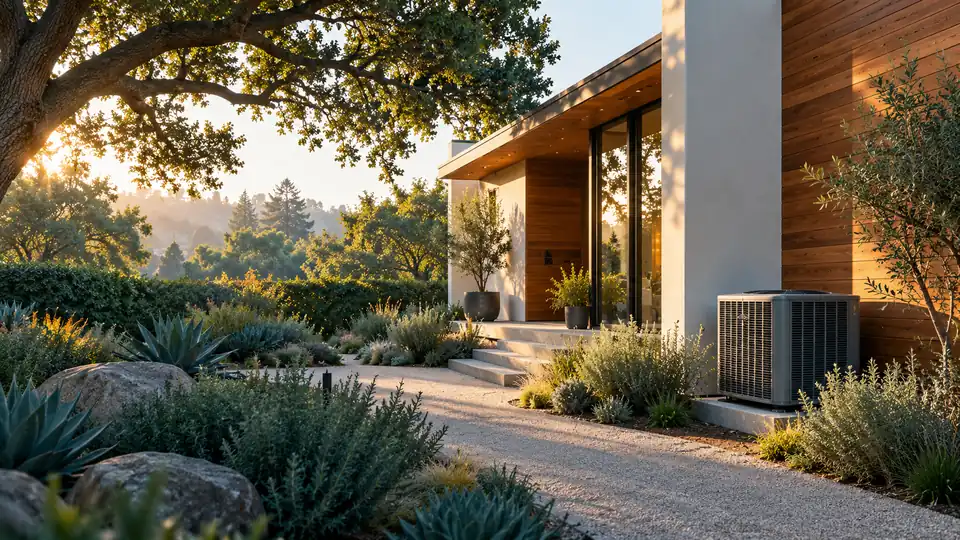
AC Installation & Replacement, sized for your Palo Alto home
A new cooling system should be quiet, efficient and the right size. We calculate the load room by room, compare central, heat pump and ductless options, and handle the City of Palo Alto permit.
Call 650-460-3483438 Cambridge Ave, 94306
AC installation in Palo Alto begins with a load calculation, not a rule of thumb. ComfortFlow sizes equipment for your home’s windows, insulation and sun exposure, then compares central air, heat pump and ductless options. For most Palo Alto homes replacing a gas furnace, a heat pump delivers cooling and heating together and qualifies for a City of Palo Alto Utilities rebate.
Start with the right question: AC or heat pump?
In Palo Alto, almost every “new AC” conversation is really a heat pump conversation. A heat pump is an air conditioner that can also run in reverse to heat your home. If you have a gas furnace that is aging, installing a heat pump replaces both the furnace and the AC in one project. City of Palo Alto Utilities (CPAU) offers a rebate when a heat pump replaces a gas heater, and the City offers an instant permit for qualifying residential heat pump installs.
A cooling-only AC still makes sense in a few cases: a newer furnace with plenty of life left, or a home where you only need cooling in a few rooms. We’ll lay out both paths.
How we size a system
Oversized systems are common and costly. They short cycle, leave the air clammy, and wear out sooner. Undersized systems run all afternoon and still can’t keep up. We avoid both with a room-by-room load calculation that accounts for:
- Window area and orientation, including big west-facing glass common in mid-century homes
- Insulation levels in walls, attic and floors
- Duct location and condition
- Ceiling heights and open floor plans
- How you actually use the house, including home offices and upstairs bedrooms
Installation options
| Option | Best for | Notes |
|---|---|---|
| Central heat pump | Homes with usable ductwork replacing a gas furnace | Cooling and heating in one system. Eligible for CPAU heat pump rebate when replacing gas. |
| Central AC only | Homes keeping a newer furnace | Lowest change to the existing setup. |
| Ductless mini-split | Additions, ADUs, Eichlers, homes without ducts | Zone control. See our ductless page. |
| Ducted mini-split | Houses with short duct runs or a single floor zone | Quiet, concealed air handler. |
Permits, noise and placement
Palo Alto is strict about outdoor equipment, and that’s a good thing for neighbors. The City’s instant permit for residential heat pumps covers detached single-family homes, duplexes and ADUs with up to three systems, and requires equipment rated under 65 dBA, kept off the roof and out of view from the street. We handle the paperwork, including the load calculation and the energy compliance documents, and we place the condenser where it meets setback requirements. More detail is in our Palo Alto instant permit guide.
What installation day looks like
Most replacements take one to two days. We protect floors, remove the old equipment, set the new indoor and outdoor units, pressure test and evacuate the refrigerant lines, commission the system, and walk you through the thermostat before we leave.
Comparing cooling options for Palo Alto homes
| Central heat pump | Central AC | Ductless mini-split | |
|---|---|---|---|
| Heats and cools | Yes | Cooling only | Yes |
| Needs ductwork | Yes | Yes | No |
| Replaces gas furnace | Yes | No | Yes, room by room |
| CPAU rebate eligible | When replacing gas heat | No | When replacing gas heat |
| Zoning | With dampers or multiple systems | With dampers | Built in, per room |
| Best fit | Homes with good ducts | Newer furnace, cooling only | Eichlers, ADUs, additions |
Energy efficiency ratings, explained
New systems are rated by SEER2 for cooling efficiency and HSPF2 for heat pump heating efficiency. Higher numbers use less electricity, but the biggest gains come from correct sizing, sealed ducts and proper refrigerant charge. A high-efficiency unit installed poorly can perform worse than a mid-range unit installed well.
Why Palo Alto homeowners choose ComfortFlow HVAC Palo Alto for AC installation
ComfortFlow HVAC Palo Alto has served Palo Alto homes for over 10 years from our shop at 438 Cambridge Ave. Every installation starts with a room-by-room load calculation and ends with commissioning: refrigerant charge, airflow and temperature split verified before we leave.
- Diagnosis before recommendations. We measure first, then explain what we found in plain language.
- Repair prices up front. You see the cost before any work begins, and replacement only comes up when it makes sense.
- Local know-how. CPAU rebates, the City heat pump instant permit, Eichler radiant systems and Palo Alto’s older housing stock.
- Respect for your home. Drop cloths, protected floors and trim, and a clean work area at the end of every day.
AC Installation, step by step
- Home visitWe look at your equipment, ducts, panel and the outdoor spot.
- Load calculationRoom-by-room sizing so the system fits the house.
- Written optionsTwo or three paths with clear trade-offs and rebate notes.
- Install and permitClean install, commissioning, inspection and rebate paperwork.
Often paired with ac installation
AC Installation across Palo Alto and nearby
We’re based at 438 Cambridge Ave and work in every Palo Alto neighborhood. Local notes for each area:
New to us? Start with our overview of HVAC in Palo Alto.
AC Installation questions,
answered.
Answers from the ComfortFlow HVAC Palo Alto team about ac installation in Palo Alto homes.
How long does AC installation take?
A straightforward replacement usually takes one to two days. Adding ductwork or a new electrical circuit can add time, and we’ll tell you up front. Day one usually covers removing old equipment, setting the new outdoor unit and air handler, and running the refrigerant lines. Day two covers electrical, pressure testing, evacuation, startup and commissioning. Ductless systems with several indoor heads may take longer. We confirm the schedule in writing and clean up each day so your home stays livable.
Do I need a permit to install AC in Palo Alto?
Yes. Replacing or adding HVAC equipment requires a permit. Qualifying residential heat pump projects can use the City’s instant permit process, which we file for you. Permits are not just paperwork. Inspectors check electrical connections, refrigerant line work, condensate drainage and outdoor unit placement. Under the City’s rules, heat pump units must sit off the roof and out of view from the street, with a calculated setback from the property line. A final inspection is also required before you can apply for CPAU rebates.
Should I get a heat pump instead of an AC?
If your furnace is gas and more than about 12 to 15 years old, usually yes. A heat pump replaces both, runs on Palo Alto’s electric supply, and qualifies for the CPAU heat pump rebate when it replaces gas heat. The equipment cost of a heat pump is close to a comparable air conditioner, and it eliminates the need for a separate furnace. In Palo Alto’s mild climate, a modern heat pump can handle all of your heating. If your furnace is fairly new, a cooling-only AC still works, and ComfortFlow HVAC Palo Alto will show you both options side by side.
Will my electrical panel handle a new system?
Many can. Some older Palo Alto homes need a panel upgrade, a circuit splitter or a load management device. CPAU offers add-on rebates for qualifying panel and wiring work paired with a heat pump. We check your panel’s amperage, available breaker spaces and existing loads such as EV chargers, ranges and dryers. Variable-speed equipment often draws less than older systems. If capacity is tight, a circuit splitter or smart panel can avoid a full upgrade, and both may qualify for CPAU add-on rebates when paired with a heat pump.
How loud will the outdoor unit be?
Modern variable-speed units are quiet. Palo Alto’s instant permit requires heat pumps rated under 65 dBA, and we choose placement to keep sound away from bedrooms and neighbors. Sound ratings are listed in decibels on the spec sheet, and variable-speed units run at low speed most of the time, so they are usually much quieter than the rating suggests. We also use anti-vibration pads and place units away from bedrooms, patios and your neighbors’ windows whenever setbacks allow.
Let’s make home
feel better.
Tell ComfortFlow HVAC Palo Alto what’s happening with your heating or cooling, and we’ll start with the right questions. Serving Palo Alto, Menlo Park, Mountain View, Los Altos, Stanford and the Peninsula.