

A heat pump in Palo Alto typically costs more than the U.S. average because of Bay Area labor rates and older housing. EnergySage’s 2026 data puts the national average at about $15,400 and California at about $19,800 before incentives, with ductless systems averaging higher than ducted. CPAU rebates of $2,500, or $5,000 for income-eligible households, apply when a heat pump replaces gas heat. Federal tax credits expired December 31, 2025.
The short answer
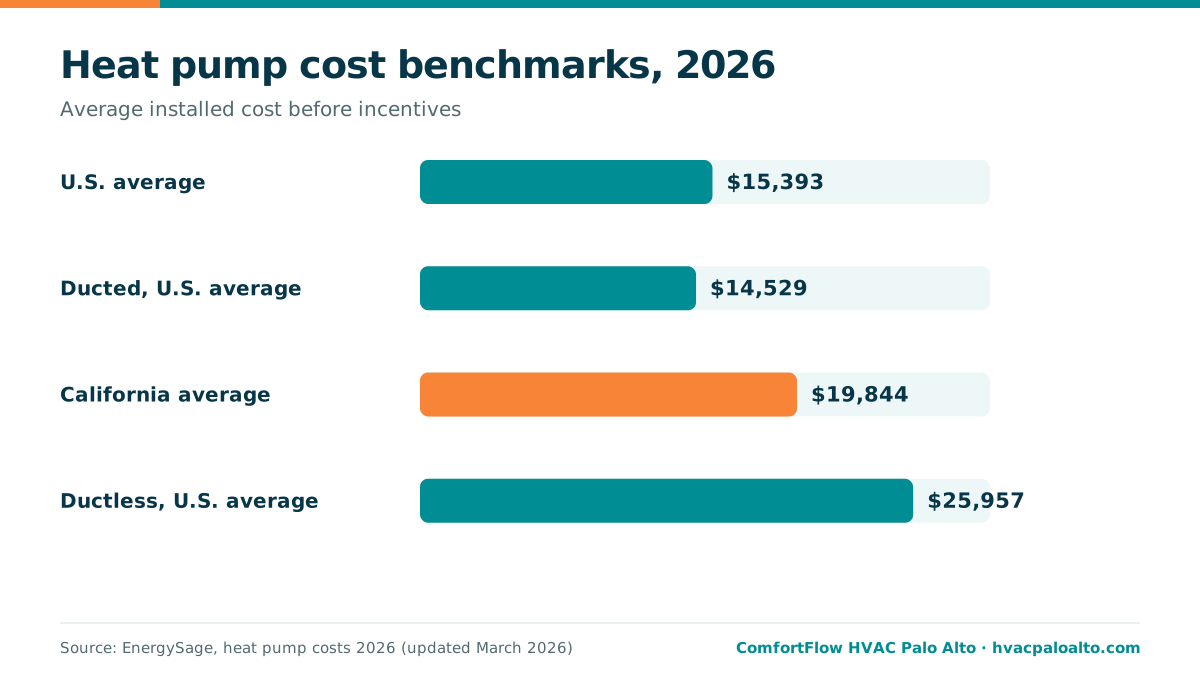
There is no single price, but good benchmarks exist. EnergySage’s 2026 data puts the U.S. average installed cost of a whole-home heat pump at about $15,400 before incentives, and California’s average at about $19,800, higher mainly because of labor costs. Ducted systems averaged about $14,500 nationally, while ductless systems averaged about $26,000. Palo Alto projects often land at or above California averages because of Bay Area labor, older homes and electrical work.
Why Palo Alto homes vary so much
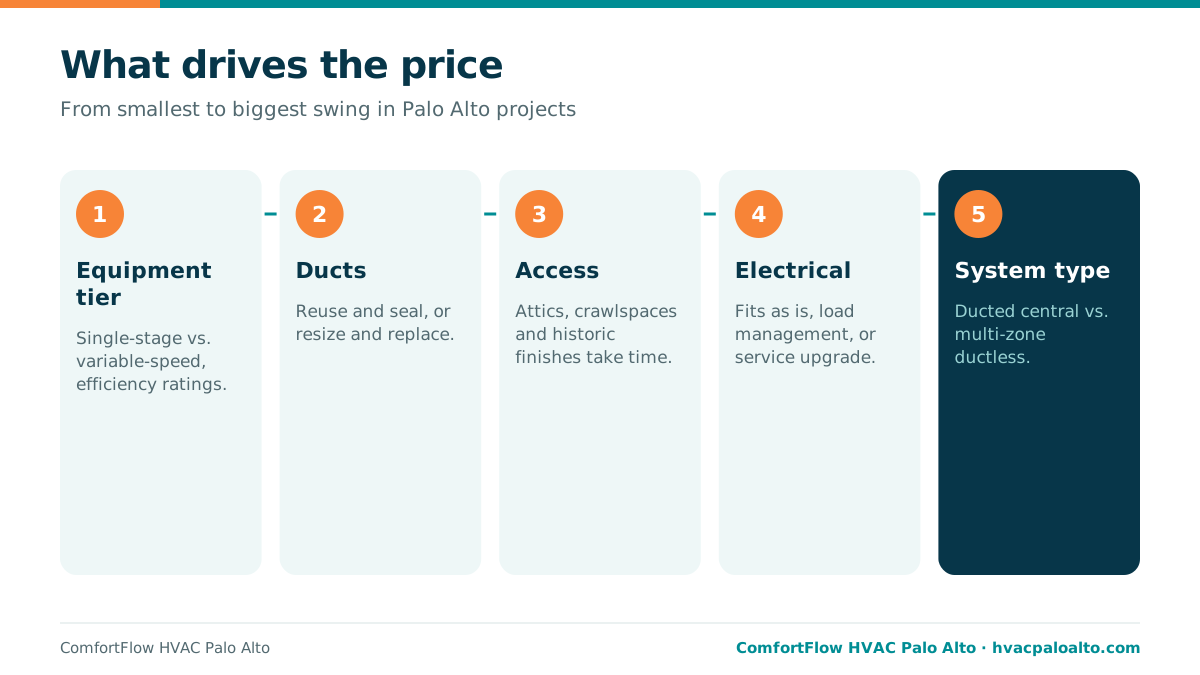
Palo Alto’s housing stock is unusually diverse. Professorville and Old Palo Alto have homes from the 1890s to the 1930s with plaster walls and tight attics. South Palo Alto has Eichlers from the 1950s with radiant floors and no attic at all. Midtown and Barron Park have post-war ranch homes with crawlspace ducts. Each changes the scope:
| Home type | Typical approach | Cost impact |
|---|---|---|
| Ranch with usable ducts | Ducted heat pump, seal ducts | Lower |
| Older two-story home | Two systems or ducted mini-split upstairs | Moderate to higher |
| Eichler with radiant floors | Ductless heads, or air-to-water heat pump | Moderate to higher |
| Home with 100 A service | Load management or panel work | Adds cost |
| Large remodel or estate | Multiple systems, zoning | Higher |
Incentives in 2026
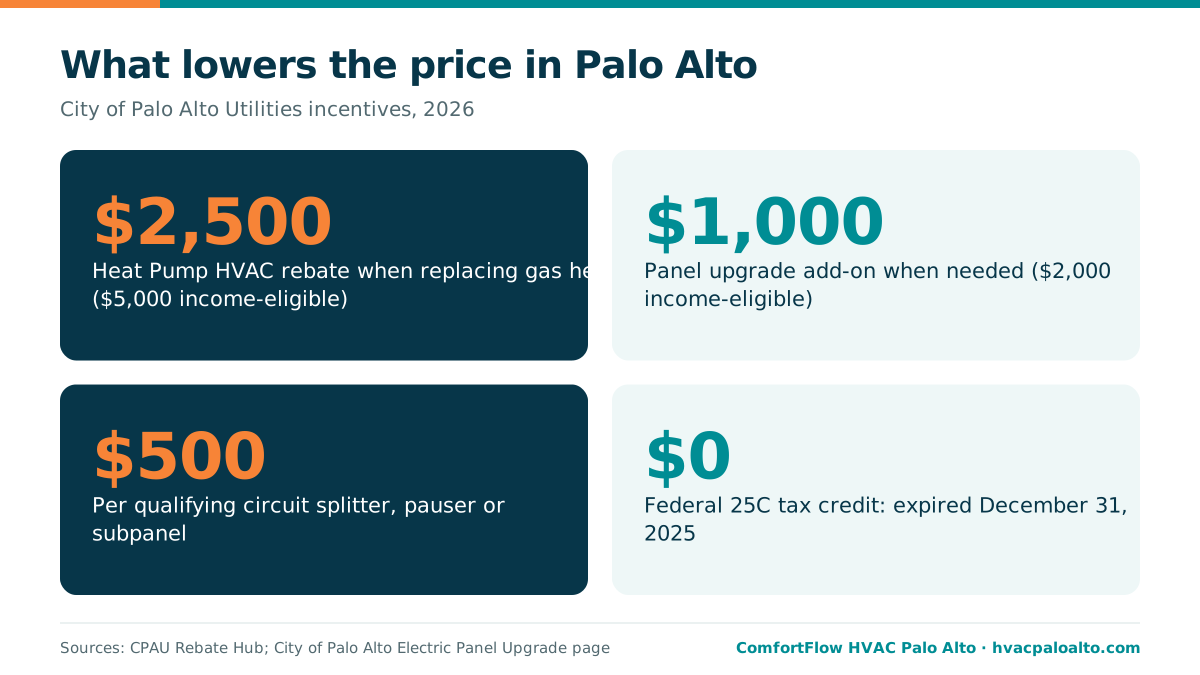
The federal residential energy tax credits expired on December 31, 2025, which makes local incentives more important than ever. City of Palo Alto Utilities offers a $2,500 Heat Pump HVAC rebate, or $5,000 for income-eligible residents, when a heat pump replaces a gas or fossil fuel heater. Add-on rebates help with panel upgrades and wiring. Neighboring cities served by PG&E rely on Peninsula Clean Energy, Silicon Valley Clean Energy and state programs instead.
Operating costs
Palo Alto’s electricity has been carbon neutral since 2013, and a heat pump replaces both your furnace and air conditioner. Operating cost depends on CPAU electric and gas rates, your home’s insulation and how you use the system. Because heat pumps move heat rather than burn fuel, they typically deliver several units of heat for every unit of electricity in Palo Alto’s mild climate, where average January lows are about 40°F.
How to get an accurate number
- Get a room-by-room load calculation, not a size copied from your old unit
- Ask for a duct inspection and the cost of any sealing or changes
- Have the electrical scope priced, including alternatives to a panel upgrade
- Make sure the quote includes the permit, commissioning and rebate paperwork
- Compare at least two system options, for example ducted and ductless
ComfortFlow HVAC Palo Alto provides written estimates with the expected CPAU rebate shown, so you can compare options on what you will actually pay. See heat pump installation or our CPAU rebate guide.