

If your AC is running but not cooling, check the thermostat mode and setpoint, the breaker and outdoor disconnect, the air filter, and whether the outdoor fan is spinning. Look for ice on the refrigerant lines and water around the indoor unit. If the outdoor unit hums without the fan turning, or ice keeps forming, turn the system off and call for AC repair.
Start with safety
If you smell burning, hear loud grinding, or see water spreading across the floor, turn the system off at the thermostat and the breaker before checking anything else. Never open electrical panels inside the outdoor unit; capacitors can hold a dangerous charge even with power off.
Seven checks before you call
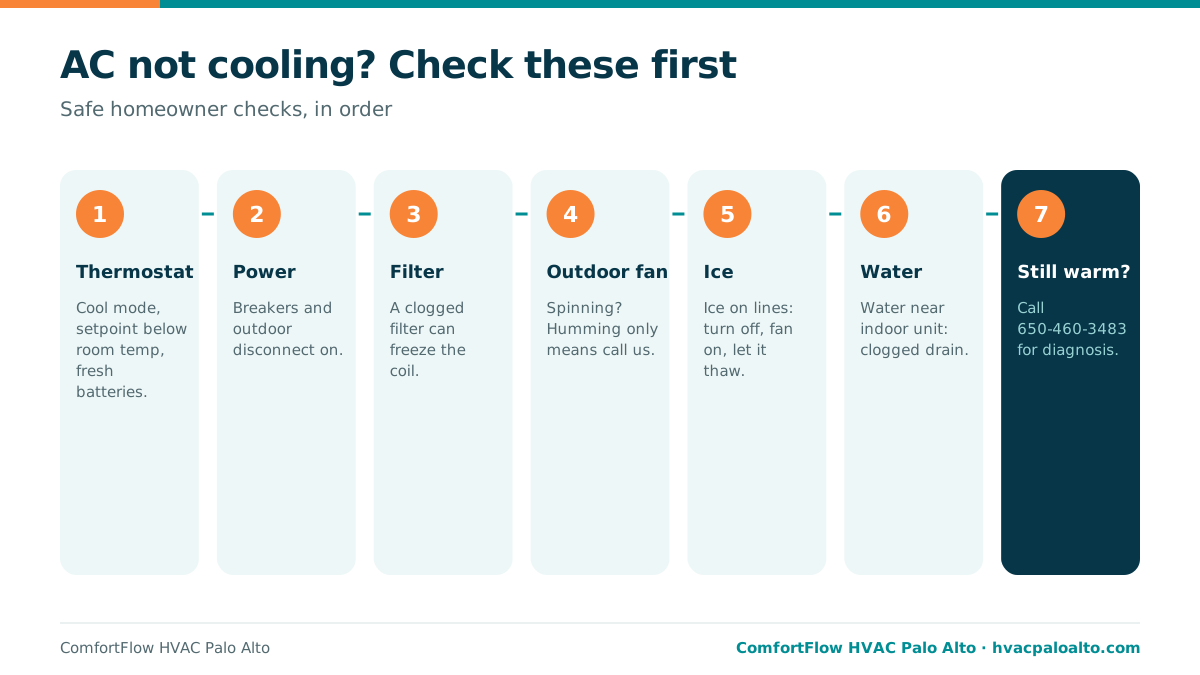
- Thermostat: set to Cool, setpoint a few degrees below room temperature, fan on Auto, fresh batteries if it uses them.
- Power: check the breakers for the indoor unit and the outdoor unit, and the outdoor disconnect switch near the condenser.
- Filter: a badly clogged filter restricts airflow and can freeze the indoor coil.
- Outdoor fan: with the system calling for cooling, the fan on top of the outdoor unit should spin. A hum with no fan usually means a failed capacitor or fan motor.
- Ice: ice on the refrigerant lines or indoor coil means turn cooling off, set the fan to On, and let it thaw for a few hours.
- Water: water around the indoor unit points to a clogged condensate drain or a tripped float switch.
- Vents and returns: make sure supply vents are open and return grilles are not blocked by furniture or rugs.
The most common causes we find
| Symptom | Likely cause | Fix |
|---|---|---|
| Fan not spinning, unit hums | Failed capacitor | Replace capacitor |
| Air not cold, system runs constantly | Low refrigerant from a leak, dirty coil | Find leak, repair, clean coil |
| Ice on lines | Restricted airflow or low charge | Filter, blower check, charge |
| Indoor unit off, water present | Clogged condensate drain | Clear drain, test float switch |
| Short cycling | Thermostat, sensor or oversized unit | Recalibrate, evaluate sizing |
| One room hot, rest fine | Duct problem | Seal, repair or rebalance |
Why Palo Alto ACs fail on the first hot day
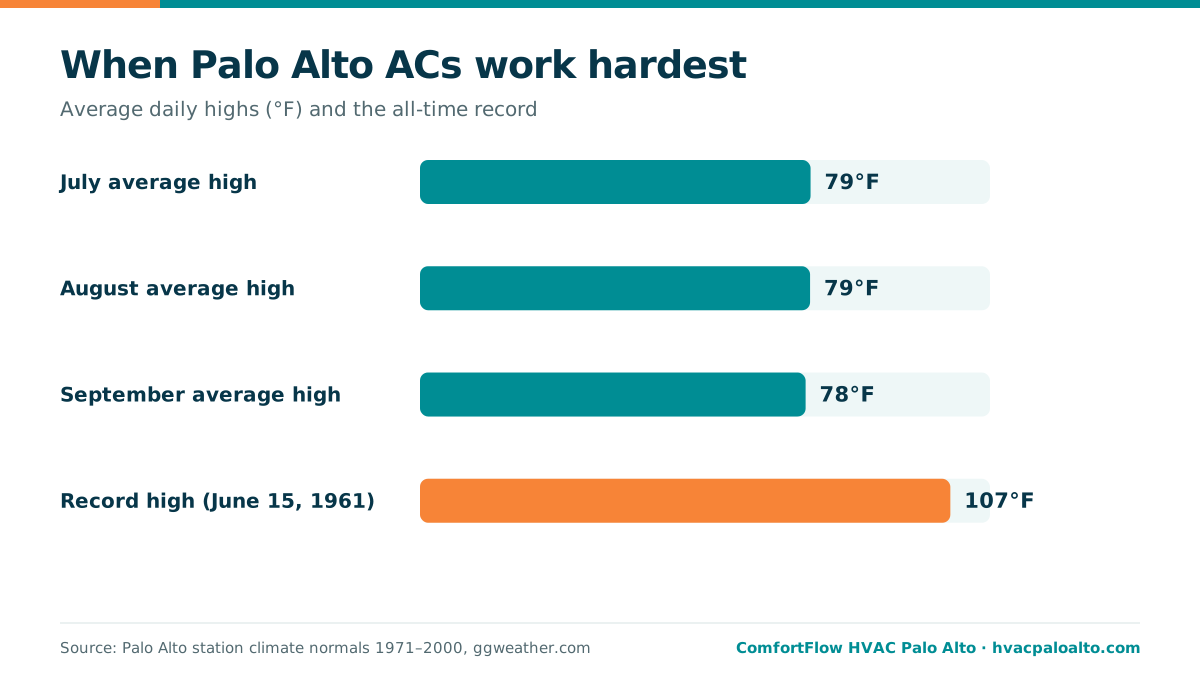
Palo Alto’s average highs peak just under 80°F in July and August, with September nearly as warm. Most systems sit idle much of the year, then run hard during the first heat wave. Weak capacitors, algae-clogged drains and dirty coils show up all at once, which is when every HVAC company in the Bay Area gets busy. The record high here is 107°F, set on June 15, 1961, so a properly maintained system matters.
What to tell the technician
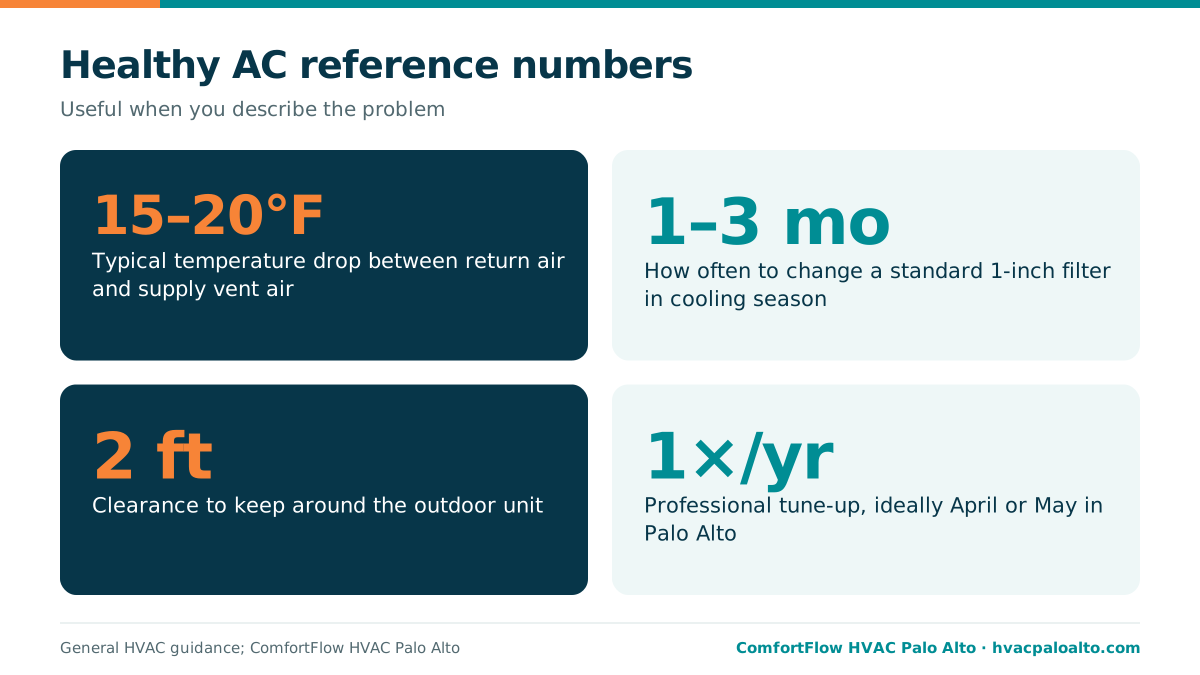
Note when it stopped cooling, whether the outdoor unit runs, any sounds or smells, and the temperature of the air at a supply vent compared with the room. A healthy system typically cools air about 15 to 20°F between the return and the supply.
If the checks above do not solve it, ComfortFlow HVAC Palo Alto can diagnose it. See AC repair or call 650-460-3483. If your system is older and the repair is major, our repair or replace guide walks through the decision.